
Measuring cracks and movement in homes
Structural movement and cracks can be worrying, particularly when the cause, severity or next steps are unclear. Our monitoring services provide homeowners with clear, objective evidence of how their property is behaving over time, helping remove uncertainty and support informed decisions.
Rather than relying on visual inspections or isolated surveys, continuous monitoring shows whether movement is active, seasonal, stabilising or historic - providing reassurance where possible and clarity where further action is required.
Crack monitoring for homeowners FAQs
What does crack monitoring tell me about my home?
Crack monitoring shows how cracks in walls or structural elements are changing over time.
Rather than relying on visual inspections alone, monitoring provides accurate measurements that indicate whether a crack is stable, seasonal or actively widening.
This helps homeowners understand whether cracking is cosmetic or linked to underlying structural movement.
Do cracks in walls always mean there is a serious structural problem?
No. Many cracks in homes are caused by normal building movement, temperature changes or historic settlement.
Crack monitoring helps determine whether cracks are still moving or have stabilised.
By monitoring cracks over time, homeowners can avoid unnecessary (costly ££) repairs and focus only on issues that genuinely require attention.
How does crack monitoring help with subsidence concerns?
Cracks are often one of the visible signs of subsidence or ground movement.
Crack monitoring allows engineers and insurers to see how a building is responding to ground conditions.
When used alongside subsidence monitoring, it helps confirm whether cracking is linked to active subsidence, seasonal ground movement or historic issues.
Can crack monitoring support a home insurance claim?
Yes.
Crack monitoring data is commonly used during insurance subsidence investigations. The time-stamped measurements provide objective evidence showing whether cracks are progressing, stabilising or unaffected by seasonal changes.
This information helps insurers assess liability, determine next steps and decide whether repairs are necessary.
How is crack monitoring installed in a home?
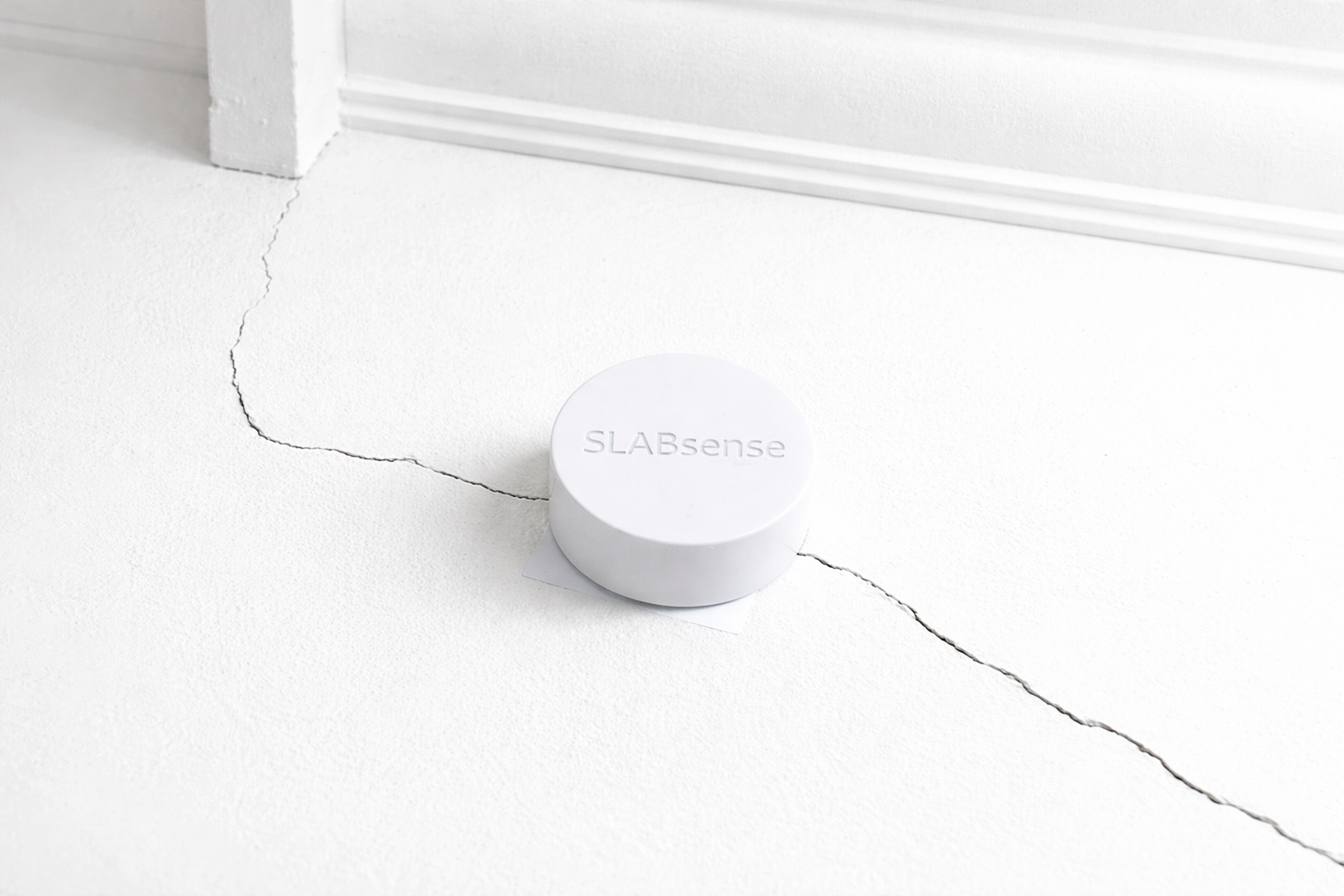
Our crack monitoring sensors are installed directly over existing cracks by experienced technicians.
Installation is quick, clean and minimally intrusive, with no need for drilling, excavation or major building work.
Sensors are discreet and suitable for occupied homes, allowing normal day-to-day living to continue.
How long does crack monitoring usually take?
Crack monitoring in homes typically lasts between three and twelve months.
The duration depends on the nature of the cracking and whether seasonal movement needs to be assessed.
In some cases, monitoring may be extended to capture longer-term trends or confirm stabilisation.
What information will I receive from crack monitoring?
Homeowners receive secure online access to monitoring data presented as clear graphs and summaries.
The data shows how cracks are behaving over time and can be shared easily with insurers, surveyors or structural engineers.
This makes it easier to understand what is happening and what action, if any, is required.
Can crack monitoring be used on its own or with other monitoring services?
Crack monitoring can be used as a standalone service or combined with subsidence monitoring or floor level monitoring.
Using multiple monitoring types together can provide a more complete picture of how a home is behaving, particularly where cracking and ground movement may be related.
What happens if crack monitoring shows movement is continuing?
If monitoring shows that cracks are actively changing, the data helps professionals determine the most appropriate next steps. This may include further investigation, extended monitoring or targeted repair.
Importantly, decisions are based on evidence rather than assumption, reducing unnecessary disruption or cost.
Who should consider crack monitoring in their home?
Crack monitoring is suitable for homeowners concerned about cracks in walls, suspected subsidence, uneven floors or post-repair stability.
It is also useful where reassurance is needed before committing to costly repairs or during an insurance investigation. Monitoring provides clarity and peace of mind through reliable data.
Speak to a Monitoring Specialist
If you require subsidence monitoring, slab movement monitoring or crack monitoring, our team can help define the most appropriate solution for your site.