
Subsidence monitoring for residential & commercial buildings
Subsidence monitoring provides accurate, long-term measurement of ground and building movement, enabling engineers, insurers and property owners to understand whether subsidence is active, seasonal, stabilising or progressive. Rather than relying on isolated survey visits, continuous monitoring delivers the evidence required to make proportionate, informed decisions.
Our subsidence monitoring solutions use discreet, permanently installed sensors to capture high-resolution movement data over time, supporting investigation, repair planning and post-repair verification across residential and commercial properties.
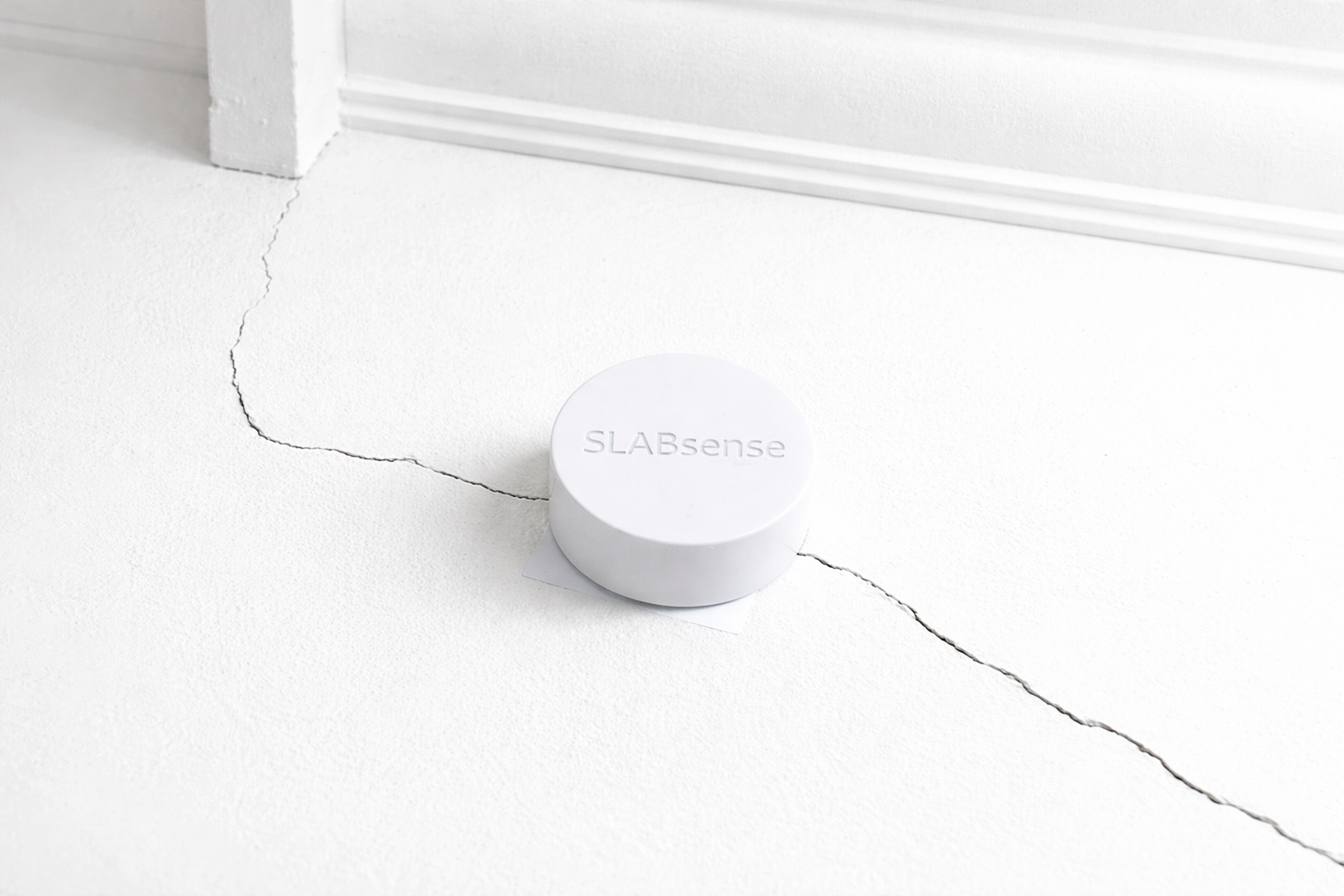
Subsidence monitoring
What is subsidence monitoring?
Subsidence monitoring is the process of measuring vertical and differential movement in a building or structure over a defined period. It is typically required where there is concern that the ground beneath foundations is moving, often due to:
- Clay shrinkage or swelling
- Tree or vegetation influence
- Drainage defects or leaks
- Made ground or poor soil conditions
- Historical movement or structural cracking
Because subsidence can be slow, cyclical or seasonal, single surveys rarely provide sufficient evidence. Continuous monitoring allows movement trends to be identified with far greater confidence.
Why is subsidence monitoring is essential?
In many cases, subsidence investigations fail or become prolonged because of insufficient or inconsistent data. Our monitoring approach addresses this by providing daily, automated measurements, removing uncertainty and reducing reliance on repeated site visits.
Subsidence monitoring helps to:
- Confirm whether movement is ongoing or historic
- Distinguish seasonal movement from progressive failure
- Support engineering assessments and recommendations
- Avoid unnecessary or premature repair works
- Provide clear evidence for insurers and stakeholders
How does subsidence monitoring work?
Our system combines professionally installed sensors with secure, cloud-based data access, allowing movement to be tracked continuously and remotely.
The monitoring process:
- Initial assessment to determine monitoring locations and duration
- Installation of sensors with minimal disruption to the property
- Automated data capture, typically recorded daily
- Secure online dashboard showing clear movement trends
- Reporting and interpretation to support decision-making
Monitoring periods typically range from 6 to 12 months, depending on site conditions and investigation requirements.
Who uses subsidence monitoring?
Our subsidence monitoring services are used by a wide range of professionals involved in managing structural risk.
Common users include:
- Insurance companies and loss adjusters
- Structural and geotechnical engineers
- Ground engineering and repair contractors
- Housing associations and local authorities
- Property owners and managing agents
The data produced supports technical assessments, claim decisions and repair strategies, providing a clear audit trail of movement behaviour.
What are the benefits of continuous subsidence monitoring?
Benefits of Continuous Subsidence Monitoring
Compared with traditional levelling surveys, continuous subsidence monitoring offers significant advantages.
Key benefits include:
- High-frequency measurements rather than periodic snapshots
- Sub-millimetre accuracy and consistency
- Reduced site visits and associated costs
- Early warning of accelerating movement
- Clear, visual outputs for reports and stakeholders
By identifying trends early, monitoring helps prevent unnecessary disruption and expense, while ensuring genuine risks are not overlooked.
Is subsidence monitoring useful for insurance claims?
Subsidence Monitoring for Insurance Claims
Subsidence monitoring is frequently required as part of an insurance claim investigation, particularly where liability, causation or timing must be established. Continuous monitoring provides objective, time-stamped data that supports fair and evidence-based outcomes.
Our monitoring solutions are well suited to:
- Initial claim investigations
- Ongoing movement assessment
- Pre- and post-repair validation
- Demonstrating stabilisation prior to claim closure
What will I receive when I appoint Slabsence for crack and ground monitoring?
When you appoint us for subsidence monitoring, you receive:
- Professionally installed monitoring sensors
- Continuous, automated measurement
- Secure online access to movement data
- Clear graphical trends and summaries
- Support for engineering and insurance reporting
All data is collected and presented in a format suitable for technical review and decision-making.
Speak to a Monitoring Specialist
If you require subsidence monitoring, slab movement monitoring or crack monitoring, our team can help define the most appropriate solution for your site.