
Crack Repair for Homes and Commercial Buildings
Cracks in walls are one of the most visible signs that a building has moved. We provide professional crack repair for masonry, brickwork and internal walls, using proven structural repair techniques that restore strength permanently, not cosmetic fixes that fail.
And because monitoring is at the core of what we do, every repair is backed by data. We can confirm whether a crack is still moving before work is specified, and verify that the repair has performed once it is complete.
Crack repair FAQs
Why do cracks come back?
Most failed crack repairs fail for the same reason: the crack was filled, but the cause was never addressed and the masonry was never reconnected. Cracks are typically caused by subsidence, heave, settlement, seasonal ground movement, failed lintels or thermal movement.
A lasting repair does two things. It restores the structural integrity of the wall, and it is carried out at the right time, once movement is understood. Our approach delivers both.
How do you repair cracks in walls?
We use established structural repair methods, selected to suit the wall construction, crack pattern and cause of movement. All repairs are fully concealed once complete.
What's crack stitching?
Crack stitching is the industry-standard method for permanently repairing cracked masonry. Stainless steel helical bars are bonded into slots cut into the mortar beds, extending a minimum of 500mm either side of the crack, and set in a high-strength cementitious grout.
The bars reconnect the cracked masonry and redistribute tensile forces along their full length, restoring the strength and flexural stability of the wall while accommodating natural building movement. Once the beds are repointed and the crack is filled to match, the repair is invisible.
- Permanent structural reconnection of cracked brick, block and stonework
- Suitable for vertical and stepped cracks, including near corners and openings
- Non-disruptive, with no need for taking down and rebuilding
- Fully concealed on completion
What is lintel repair and reinforcement?
Cracking above windows and doors is often caused by a failed or sagging lintel. Longer helical bars, installed in pairs within the mortar beds, form a reinforced masonry beam above the opening, reinstating the lintel's function without replacing it. This avoids the cost and disruption of removing brickwork, and in many cases removes the need for more invasive structural work.
What is resin and grout injection?
Where cracks pass through bricks or blocks rather than following the mortar joints, or where voids need consolidating, we inject structural repair mortars and resins to bond the masonry back together.
Damaged units can also be cut out and replaced where required. The crack itself is then filled with a matched repair mortar so the finished wall looks right as well as performing right.
What is EML mesh and crack replastering?
For internal walls, the repair is finished properly, not just patched. Plaster is cut back either side of the repaired crack and expanded metal lath (EML) is fixed across the repair zone before the wall is floated and skimmed.
The mesh reinforces the new plaster and prevents hairline cracking from telegraphing through the finished surface, leaving a clean, decoratable wall.
How do you know the crack repair has worked?
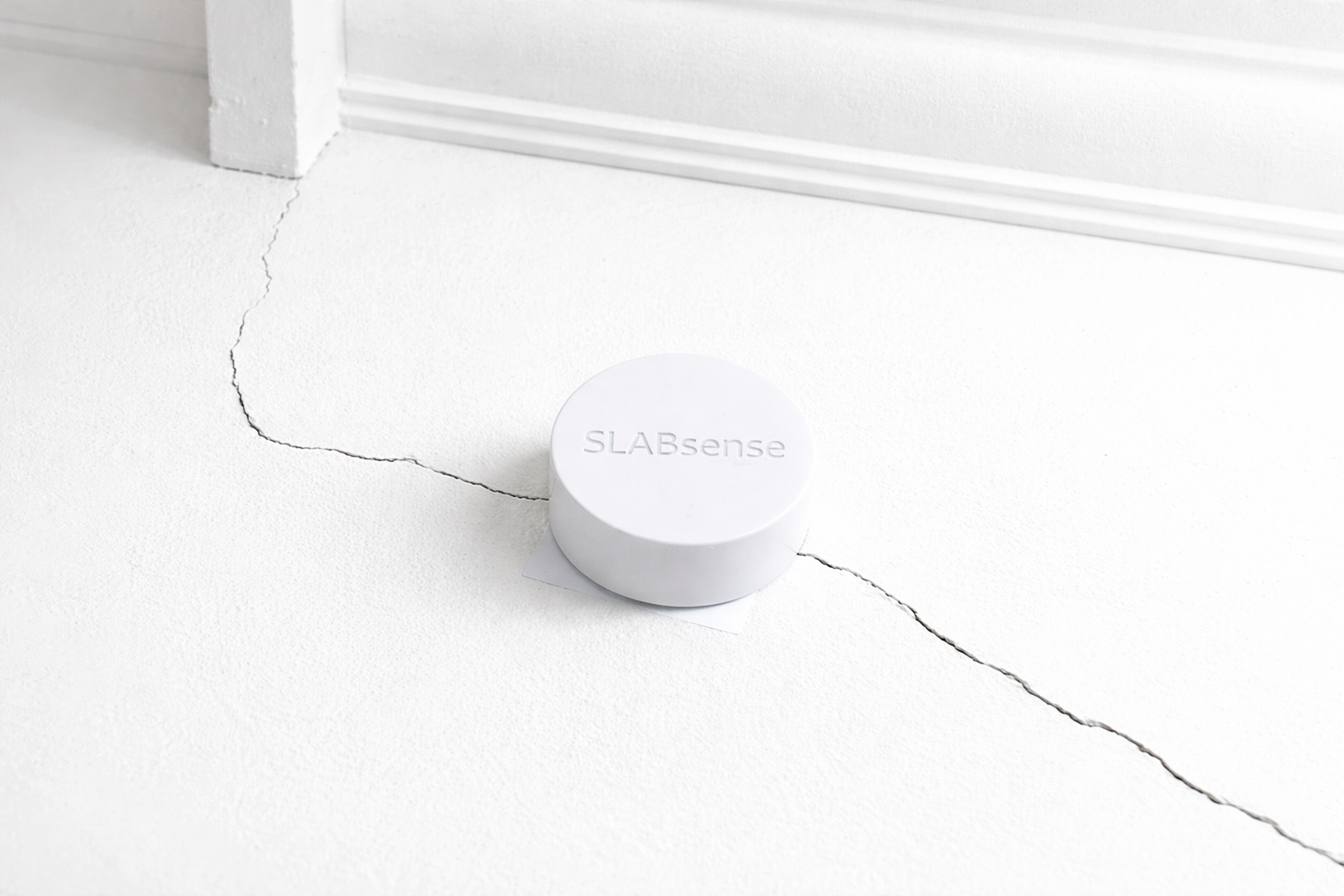
This is where we differ from a general repair contractor. Our monitoring sensors tell us whether a crack is live, seasonal or historic before any repair is specified. That means you repair once, at the right time, with the right method, rather than paying to fix a crack that is still moving.
After the repair, the same sensors provide post-repair verification: objective, time-stamped evidence that the wall has stabilised. That data supports insurance claims, warranties, engineering sign-off and property sales.
- Pre-repair monitoring to confirm crack behaviour and timing
- Repair using proven structural techniques
- Post-repair verification with continuous, automated measurement
How does Slabsense crack repair work?
Our process is designed to be straightforward and minimally disruptive.
- Assessment. We review the cracking, the likely cause and any existing reports or survey information.
- Monitoring where needed. If crack behaviour is unclear, discreet sensors confirm whether movement is active before repair is specified.
- Repair. Crack stitching, lintel reinforcement, injection and making good, carried out by experienced technicians.
- Finish. Repointing externally, EML mesh and replastering internally, so the repair disappears.
- Verification. Post-repair monitoring provides documented evidence that the repair has performed.
Speak to a Monitoring Specialist
If you require subsidence monitoring, slab movement monitoring or crack monitoring, our team can help define the most appropriate solution for your site.